Understanding the foundation of technological advancement and economic growth.
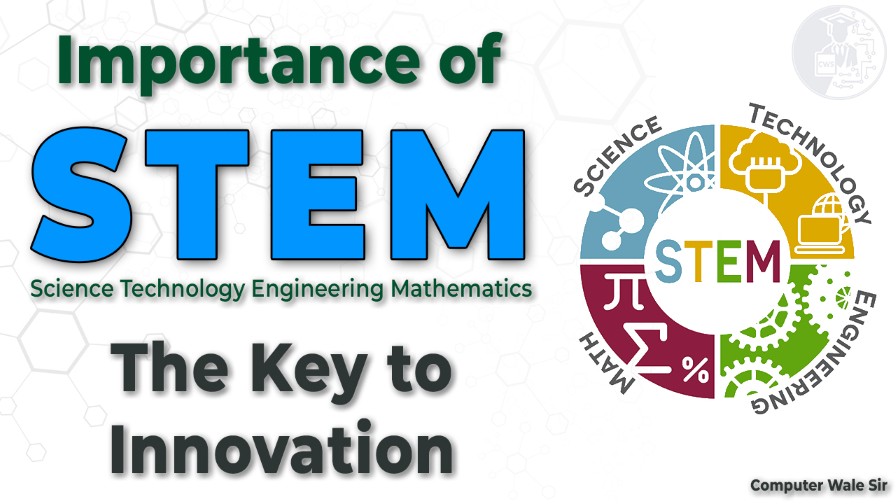
STEM, which stands for Science, Technology, Engineering, and Mathematics, is an educational approach that emphasizes problem-solving, creativity, and critical thinking. This interdisciplinary method prepares students for careers in various industries, from robotics and artificial intelligence to space exploration and environmental science.
In today’s rapidly evolving world, STEM education plays a crucial role in shaping future innovators, engineers, and scientists. Let’s explore its significance, core fields, and benefits.
S.T.E.M. stands for Science, Technology, Engineering, and Mathematics. It is an interdisciplinary approach to learning that integrates these four subjects to develop problem-solving skills, creativity, and critical thinking.
1. Prepares Students for the Future: STEM careers are in high demand. As industries become more technology-driven, skills in coding, data analysis, and engineering are becoming essential. By studying STEM, students can secure well-paying jobs in various fields, such as cybersecurity, biotechnology, and renewable energy.
2. Encourages Innovation and Creativity: STEM fosters creative problem-solving. Whether designing new medical treatments or developing self-driving cars, STEM professionals push boundaries and create revolutionary technologies. The blend of science, engineering, and technology allows individuals to think outside the box.
3. Develops Critical Thinking and Problem-Solving Skills: STEM education helps students analyze problems logically and find effective solutions. Whether solving a complex math equation or coding a software program, students learn critical thinking, which is valuable in all aspects of life.
4. Hands-on Learning for Better Understanding: STEM is not just about theory; it involves experiments, coding projects, engineering challenges, and real-world applications. This hands-on learning approach makes education more engaging and practical, helping students retain knowledge better.
5. Bridges the Gender Gap in STEM Fields: Historically, STEM fields have been male-dominated, but initiatives to encourage women and girls in STEM are helping bridge this gap. Programs and scholarships are now available to support women in STEM-related careers.
Science explores the laws of nature, helping us understand everything from the human body to outer space. It includes subjects like:
Science is essential for advancements in medicine, environmental conservation, and space exploration.
Technology plays a crucial role in modern life, driving advancements in areas such as:
With the rise of AI and machine learning, technology continues to shape industries worldwide.
Engineering applies scientific principles to design and build machines, infrastructure, and systems. It includes:
Engineers solve real-world problems and contribute to sustainable development and technological advancements.
Mathematics is the backbone of all STEM fields, providing tools for analysis and problem-solving. Key areas include:
Math skills are crucial for professions in finance, engineering, and computer science.
STEM-related jobs are growing rapidly. According to global reports, industries like Artificial Intelligence (AI), Space Exploration, Renewable Energy, and Biomedical Research will dominate the job market in the coming decades. Some high-demand STEM careers include:
Governments and institutions worldwide are investing heavily in STEM education to prepare the next generation of innovators.
STEM is the foundation of technological advancement and economic growth. It equips students with the skills they need to succeed in a rapidly changing world. By promoting STEM education, we prepare future generations for high-paying careers, encourage innovation, and drive scientific discoveries that improve lives.
If you’re interested in learning STEM, start by exploring coding, robotics, or hands-on science experiments. The future belongs to those who embrace STEM and use it to create solutions for real-world problems.
STEM education is an interdisciplinary approach that integrates Science, Technology, Engineering, and Mathematics to develop problem-solving, critical thinking, and innovation skills.
STEM prepares students for future careers by teaching Analytical Thinking, Coding, Engineering Principles, and Data Analysis. It helps them develop creativity, logical reasoning, and hands-on learning experiences.
Popular STEM careers include Software Developers, Data Scientists, Biomedical Engineers, Aerospace Engineers, AI Specialists, Cybersecurity Experts, and Environmental Scientists.
Students can participate in Coding Competitions, Robotics Clubs, Science Fairs, Engineering Projects, And STEM Summer Camps to gain practical experience.
No, STEM is for everyone! It encourages creativity, teamwork, and problem-solving, making it accessible to students with different interests and strengths.
STEM fields are growing rapidly, with high demand for professionals in Artificial Intelligence, Robotics, Bio-Technology, and Renewable Energy. STEM careers also offer higher salaries and job security.
Parents can support STEM learning by providing STEM-related toys, enrolling kids in Coding Classes, Encouraging Curiosity, and Engaging in hands-on science experiments at home.
Schools can incorporate Coding Lessons, Robotics Labs, Hands-on Experiments, Real-world Problem-solving, and Project-based learning to make STEM engaging for students.
 Computer Wale Sir